

I know this landscape…
This scene —
A fragment of my memory…
My memories of Mars…
Earlier this year, I decided to re-read the entirety of the original run of Gunnm (known in the West as Battle Angel Alita), a sci-fi manga that I’ve had a fondness for since I was younger. I still remember seeing the cover of the first volume, featuring a broken-down, rusted android girl, and being completely entranced by it. The soft color palette and the somber expression on the face of the so-called angel—whose wings were made of rusted steel—stayed burned into my mind long after that first encounter. Much of my attachment to the manga comes from the combination of Yukito Kishiro’s fantastical artwork and his deeply psychological storytelling, which constantly explores the evolving psyche of its protagonist. Throughout the series, Alita repeatedly finds herself psyche evolving into something more introspective, showing her conflict of trying to reassess her right to exist and her desire to fight in a harsh, male-dominated cyberpunk wasteland, trapped between identity and survival.
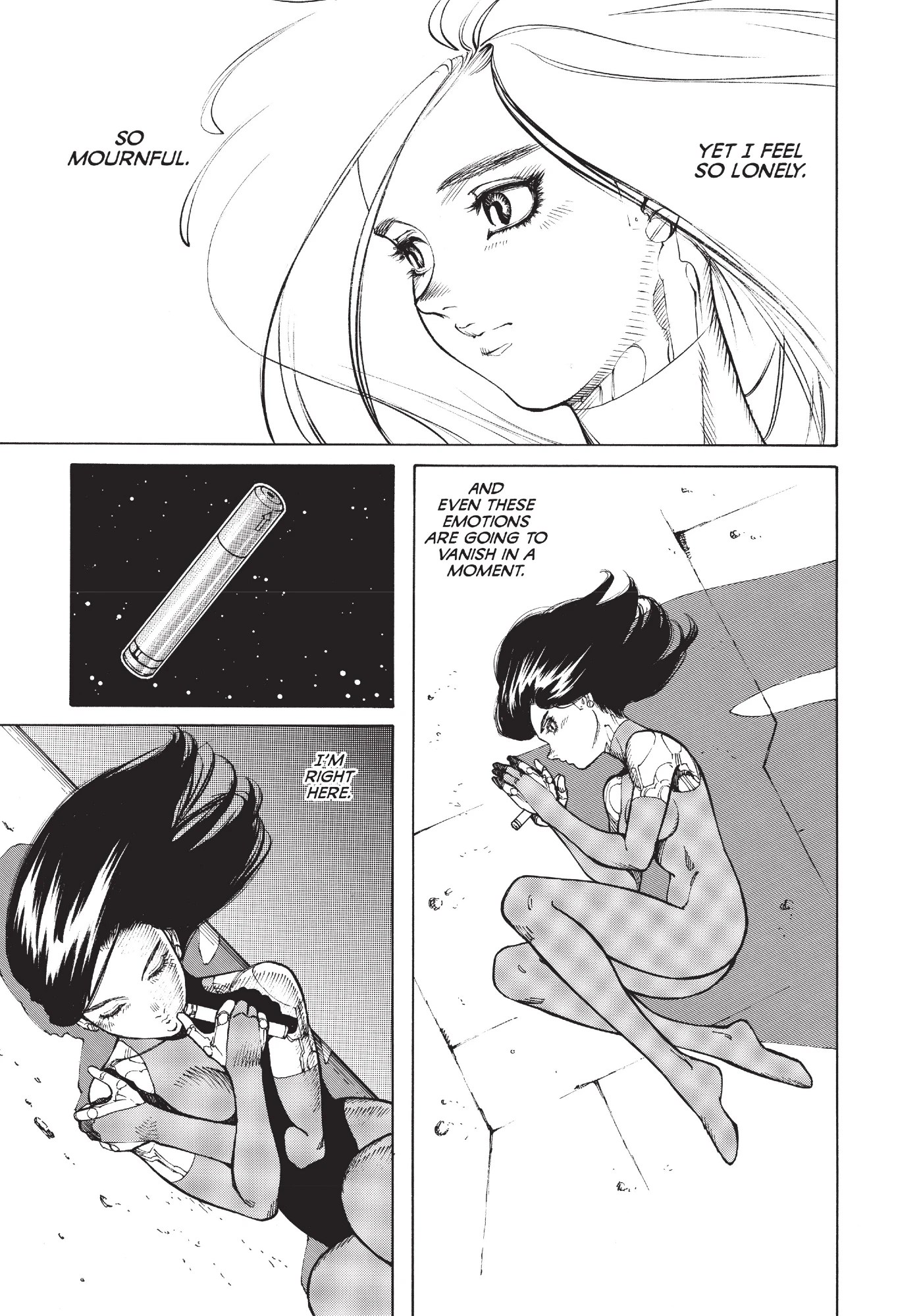
Due to a health scare, Kishiro made the difficult decision to end the manga earlier than originally planned, choosing to provide the narrative a rushed conclusion that would wrap up its central themes rather than risk leaving the story unfinished entirely. While the ending remains divisive, I’ve always had had a great appreciation for it. Alita’s journey for identity while navigating through her own desires for self and selflessness culminates in her decision to sacrifice herself for those she loves, and those she does not know but wants to protect anyway. It is a testament to Kishiro’s ability as a writer that he was able to make a 3 chapter ending feel nothing short of perfect.
After recovering, Kishiro decided to return to the series to continue it’s narrative once again, famously retconning the original ending to continue Alita’s journey through Last Order, Mars Chronicle, and, at the time of writing, Panzer Kunst Chronicles which has just launched in June of this year. Those sequel manga weren’t actually his first attempt at continuing the story, though. His earliest attempt was launched in 1998, and in an entirely different medium.
Gunnm Martian Memory is an Action-RPG that primarily focuses on adapting the entirety of Gunnm’s nine-volume original stretch until it deviates towards the end and tells a new story across three locations: Tiphares, the city that rests above the scrapyard setting, Kethares, the city that exists above in space, and Mars, where the final act of the story takes place. Kishiro wanted to focus on providing answers to questions that the original series was unable to — showing Mar’s and it’s people, and the backstory of our protagonist Alita, primarily parts of her life as Yuko and the circumstances of her birth.
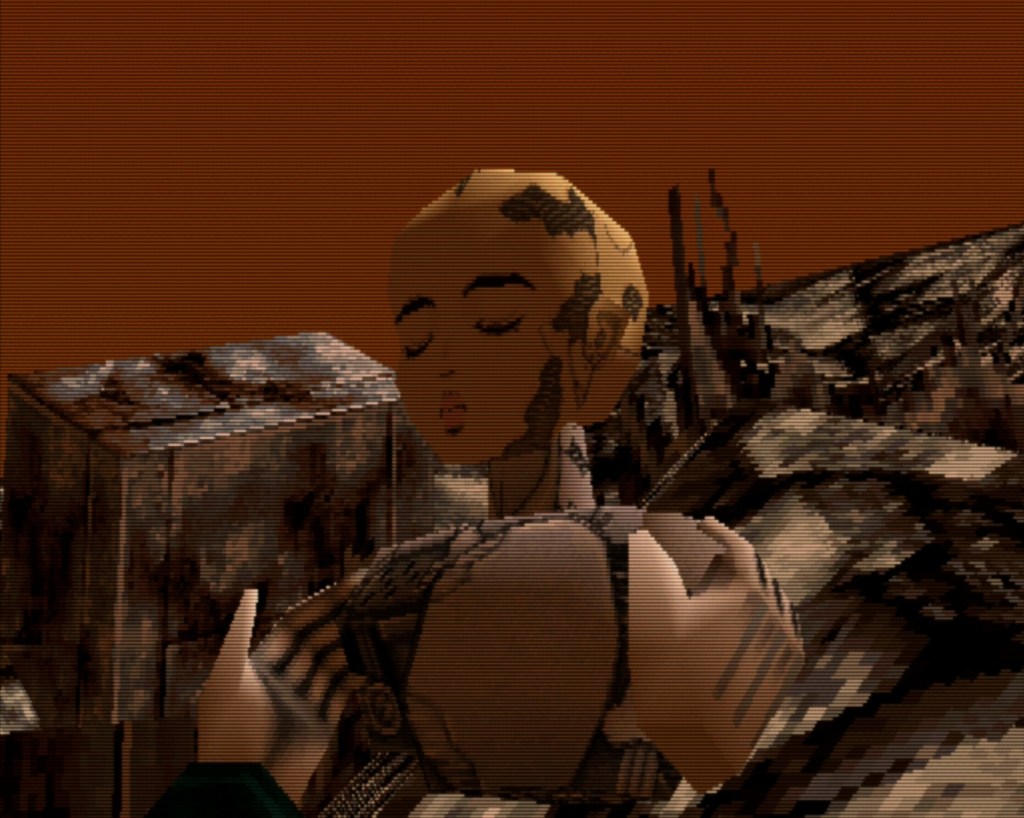
In order to translate Kishiro’s art-style to the PSX, the decision was made to transition the game from it’s original intended 2D sprite-based style into a more fully realized cel-shaded 3D engine. This has it’s advantages, although that isn’t to discredit what could have been — the possibility of a full 2D based RPG centered around this world and it’s inhabitants is something I can only hope we get to see one day in the future, but it’s current form here is perfectly serviceable. Visually, the game uses a surprisingly bright color palette — I was expecting more of the manga’s subtle coloring, but I think this actually helped the game overall standout compared to its counterpart.
Much of the dialogue is ripped straight from the manga, albeit often-times simplified or shortened in order to save length in the roughly 27-30 hour experience. Additionally, the only way to play the game in English is through a translation that isn’t perfect — often times, the translation feels like it needed an editor to review it. But I appreciate the work put into the translation and I was still able to play the game all the way through and have an understanding of what was going on.

Martian Memory at it’s core is an Action-RPG, although the game is a bit light on the RPG elements — you can level Alita herself up at will as long as you have the cash to raise her stats, but if you choose not to, the game will automatically level her stats up during certain story moments to the highest possible you could before that point.
Combat is a simple 3D beat-em up, with a few different weapon subtypes (daggers, guns, swords, two-handed spears, and fists) that all have their own set of simple, yet effective combos and also special “plasma” moves which require MP to spend. Most of the combat is focused around you learning the (somewhat strict) parry timing of enemy moves and performing a counter utilizing either Alita’s standard attacks or plasma attacks that deal significantly more damage than your regular combos would.
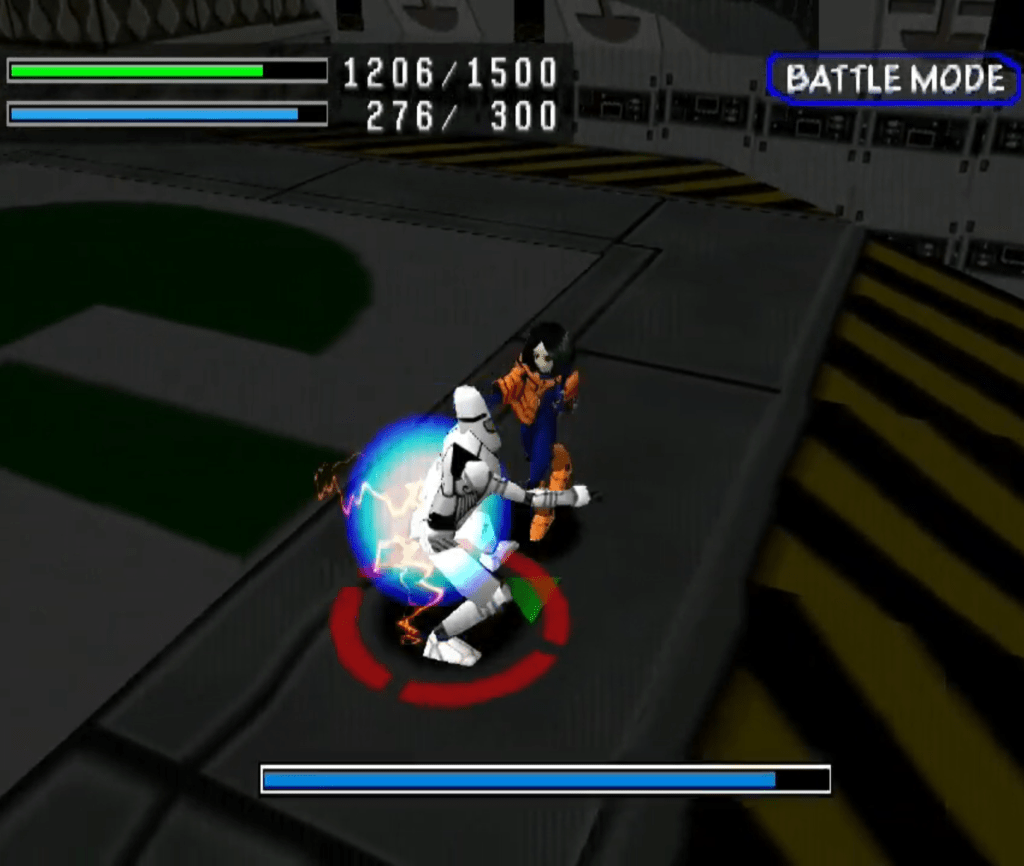
There’s a certain rhythm to the combat which I appreciated, and I found myself overall immersed by it’s flow even if towards the end of the game enemies started relying more on gimmicks — the final fight, in particular consists of a constant dance of you and another parrying one another unless you input a specific move that breaks it, or hope that the AI eventually gives out and let’s you get a move in. I wouldn’t say the combat is going to be interesting for many, especially those who have played other beat-em-ups in this era, but I enjoyed it for giving me a small taste of what Alita’s abilities were.
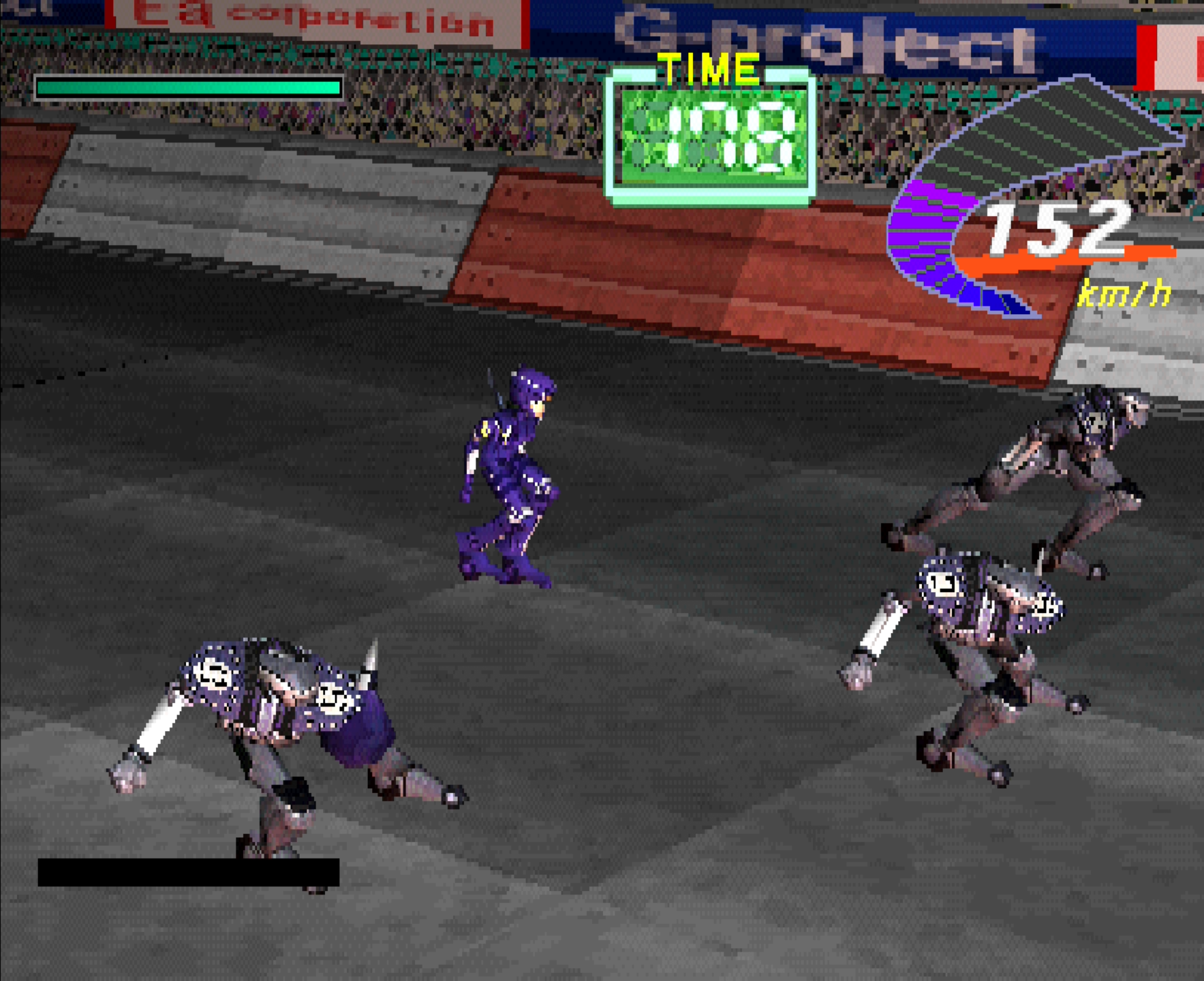
The manga’s famous Motorball sequence also returns here with full gameplay, being a short speed-based section where you really just learn how to attack and parry enemies while moving. It’s not able to be a 1:1 adaptation of the manga arc unfortunately, but I still appreciated them trying to do something with this arc rather than turning it a cutscene only experience.
The games sound design is a bit simple, with many repeating tracks playing throughout the entire experience — the very first cave theme you hear in the game is also the theme of the very final dungeon in the game itself, which is a bit disappointing. The soundtrack quality is also inconsistent, with some tracks sounding audibly clearer while others sound very compressed and hard to hear. I think the sound-design of the game is fine, and I like what is there, but I wish there was a bit more focus here to really highlight the games emotional presentation.
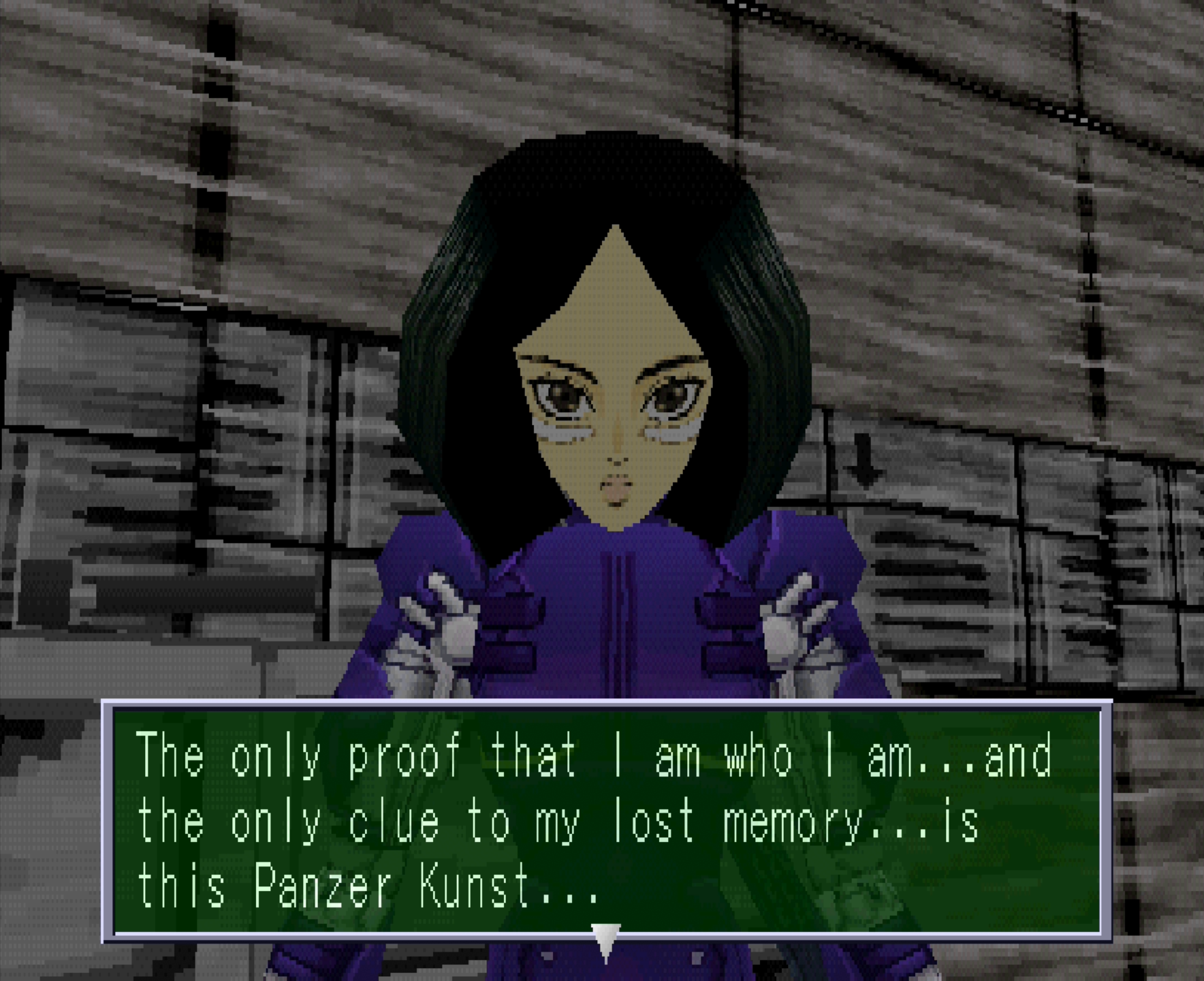
All of these elements work together in tandem with, the games narrative, with the post-manga original arc often considered the main reason to play the game and see how it expands on the original story of Alita while offering closure to many of it’s long-running mysteries. The game opens it’s final arc by having Alita ally with Nova, her previous archnemesis, and make her way towards a super-computer built high above in the orbital elevator that is threatening to destroy and enslave the remnants of humanity. Along the way, Alita finds herself returning to her original home of mars, and finding out more about her past as Yoko, culminating in a reveal about her that reshapes much of one’s understanding of the narrative and its themes.

This is where I find myself conflicted on my experience with the game. I think Martian Memory is an often serviceable way to experience the manga’s narrative, but because of limitations it cannot adapt it perfectly, and many scenes are shortened in order to fit into the single CD-ROM disc the game is housed within. These scenes feel less effective because of this, but it’s clear this was also a symptom of the dual nature of the games distinct parts — one an adaptation, and another a soft sequel.
When entering the narrative follow up, I initially believed that this spot of the story would be significantly more fleshed out, but it suffers most of the same problems that already plagued the game up to this point. Alita find’s herself in a new spot, spends a small bit of time meeting new people and gaining insight on her past, and then quickly moves onto another location to further the over-arching narrative about the supercomputer. It feels as if the game isn’t willing to slow down in order to keep things moving, which ultimately takes a way from a story whose focus is primarily on the experiences of a young woman whose connection to others allow her to rediscover herself and her humanity. The introspective element of the narrative was always the core of Alita to me as a work, and the softening of it here only acts as a detriment to an otherwise decent companion to it’s source manga.
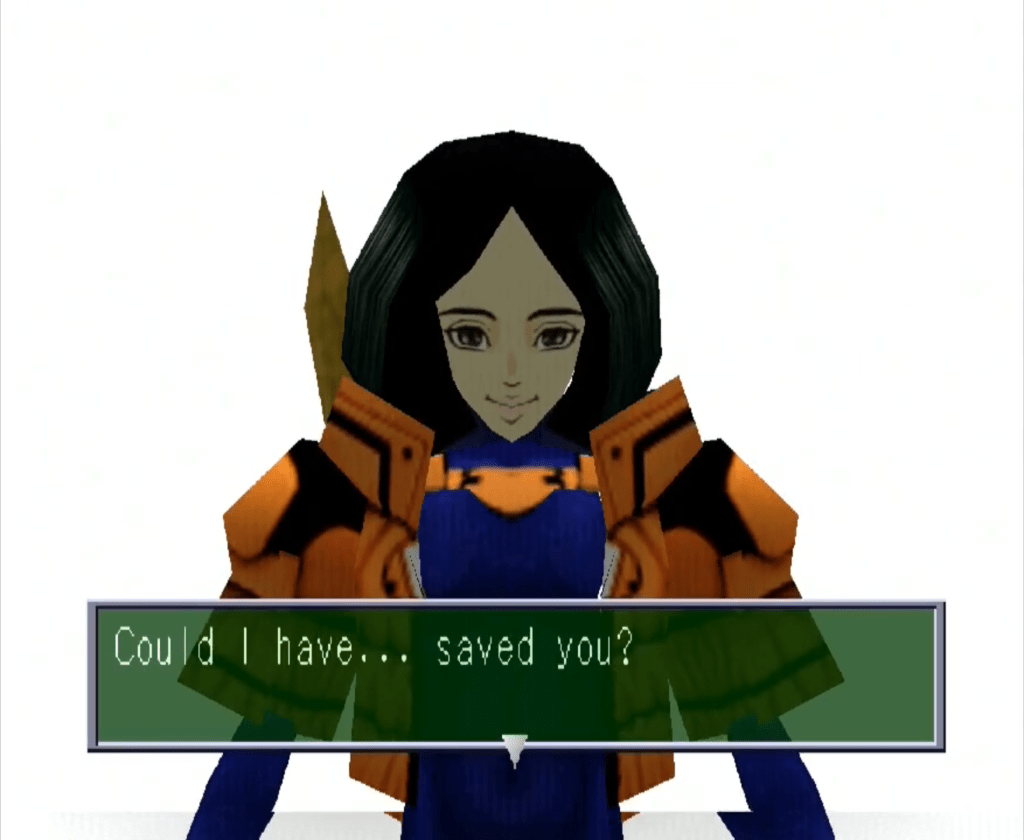
And then there is the nature of the twist. There are significant spoilers going into the rest of this writing, and at the time of this writing only some of these plot elements have made it into the current mainstay Gunnm series (primarily towards the back half of Mar’s Chronicle), so feel free to skip to the end if necessary.
SPOILERS BELOW
On Mars, Alita find’s records indicating that she might be connected to a former Queen of Mars who passed away 200 years ago. While exploring to find the perpetrator behind the supermachine’s meltdown in Mars, Alita hears mention of a disease where faces began to grow on peoples body like a tumor, one which was considered fatal until a cure had been recently discovered some decades ago.

Alita discovers that these tumors are actually sentient fetuses, and that she herself is one born from the former Queen, sharing much of her genome map, in essence being something akin to her “sister”. She also discovers that the queen still exists, albeit no longer with her body intact, lost to the disease — now, she only exists as a hateful brain whose inability to process how what she proclaims to be the dredges of her body are able to exist independently of her in a much better state than she. She expresses hatred and envy towards Alita, whose final arc becomes about finding acceptance for herself and forgiveness for her sister, allowing the Queen’s soul to move onto the next life.
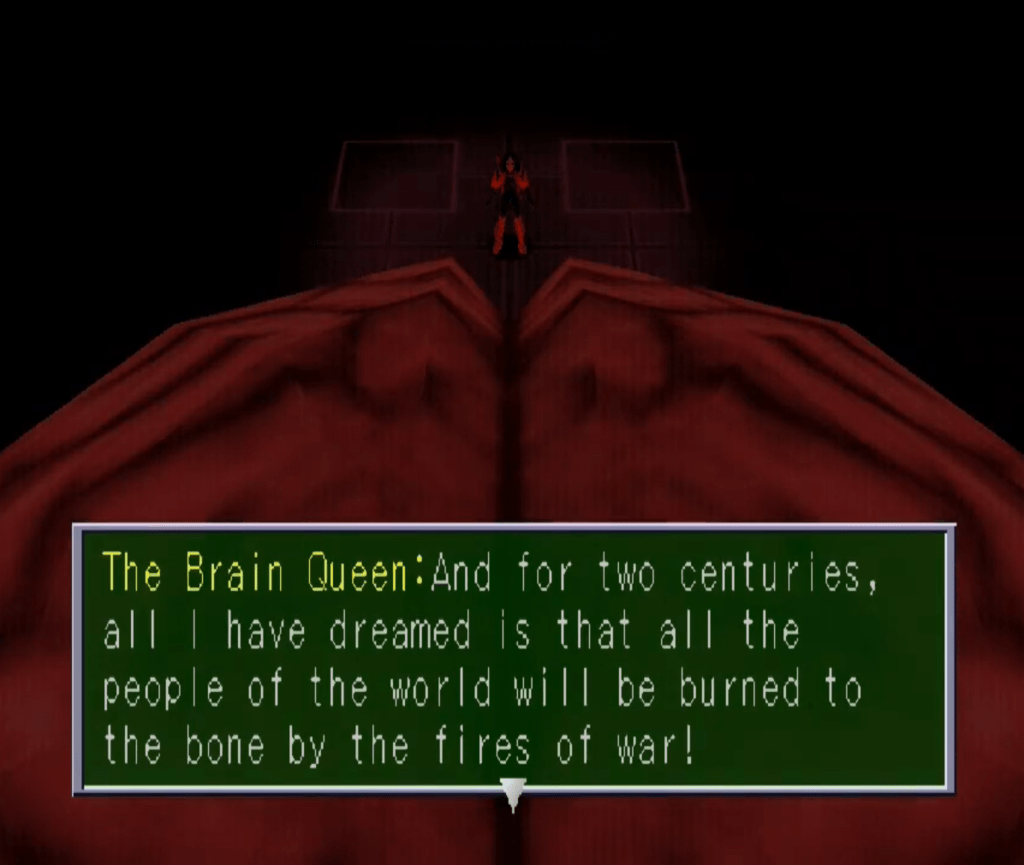
I don’t necessarily dislike this, despite how outlandish it seems on paper. The narrative crux of Gunnm has alway’s been about Alita’s journey and acceptance of her identity, even with all of her baggage. The final villain of the narrative being someone superficially jealous of her from an outsider’s perspective, without understanding or even recognizing the struggles or trauma that she has experienced across her life, is a perfect foil that helps to end off the series thematically. Another villain in this arc acts as a foil to Alita’s thirst for battle, and each antagonist compliments our protagonist well.
But the story never slows down to give these plot threads a chance to properly convey their narrative. Many scenes here are so poignant, like Alita entering the mind of her sister to discover that beneath her heart only filled with envy towards the world, there still remains a small, crying baby desperate to feel something affectionate for the first time in spite of it’s long and tired existence. But the narrative isn’t presented in a way where this scene feels earned. By itself, it is a fantastic (if not somewhat janky) showcase of the manga’s emotional core, but the narrative tissue that connects these scenes together is so thin and short that you notice the thread coming undone immediately.

And yet despite this, I still found myself enamored with the world trying to be presented here. Gunnm is just a manga so dear to me that even with this games many quirks, I was still enjoying every second of the experience, even when I came across the narrative struggles. And while I wouldn’t necessarily say I absolutely loved the ending stretch, I still felt like it was an overall solid and cohesive response to the somewhat detached if not poignant ending of the original manga. The playable epilogue portion especially was a fun time, and I enjoyed seeing Alita connect with so many old faces from her past, even if some of the circumstances were more bitter than sweet.

My time with this game was enough to remind me of what I do love about this manga, and I think despite everything, it is an often overlooked but worthy companion piece to the original run of Gunnm. Seeing ideas in Martian Memory pop up in the manga’s sequels (I am currently reading Mars Chronicle as of this writing) has been a real treat, and I think every Gunnm fan should at least watch the final stretch of this game to see a unique take on the series overarching lore and how the manga’s own sequels reused elements from this game.
————————————————-
“Looking out through these eyes…who am I?”
————————————————-
“I was once known as Yoko…and I studied Panzer Kunst, here, on Mars…”

Til we meet again, on the starlit sea…


Leave a comment